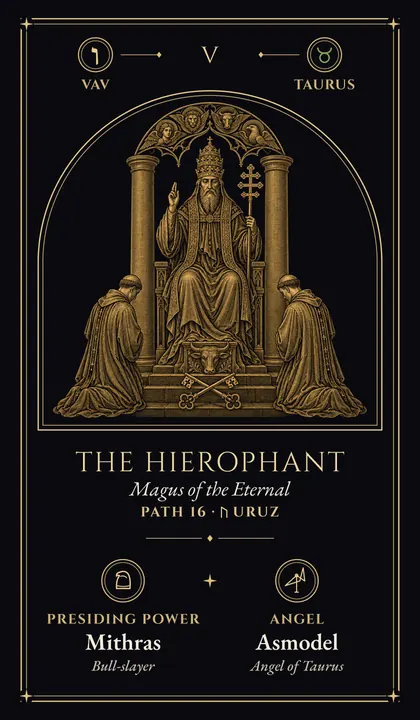
Initiation, teaching and the keys of tradition.
Upright
Learning within a lineage. A teacher, mentor, school or practice that holds real knowledge. Rituals and vows matter now. Seek the inner meaning behind the outer form.
Reversed
Dogma, empty ritual or an institution that has forgotten its purpose. Time to find your own keys.
Show the spirits
The spirit work
In the Goetia, Astaroth answers of past, present and future and teaches the liberal sciences; tradition warns to keep his breath at a distance, and the same is wise with any authority. Mithras was a god of initiates. A good card to read on before beginning a course of study.
A question to sit with
Who or what am I truly learning from, and what do I owe that lineage?

Where the card sits
Correspondences
Show the spirits
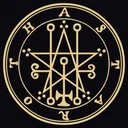
Appears as a hurtful angel riding a dragon, a viper in his right hand. Answers of all times, discovers secrets, tells how the spirits fell, teaches the liberal sciences. Goetia 29.
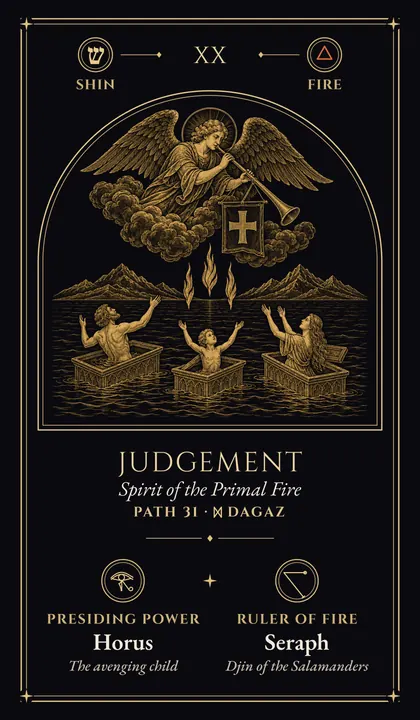
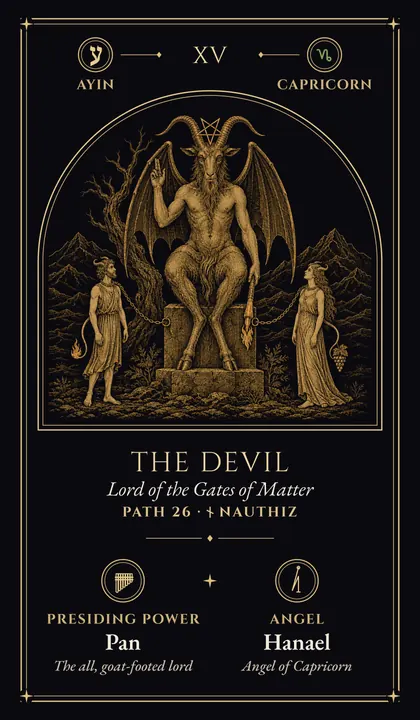
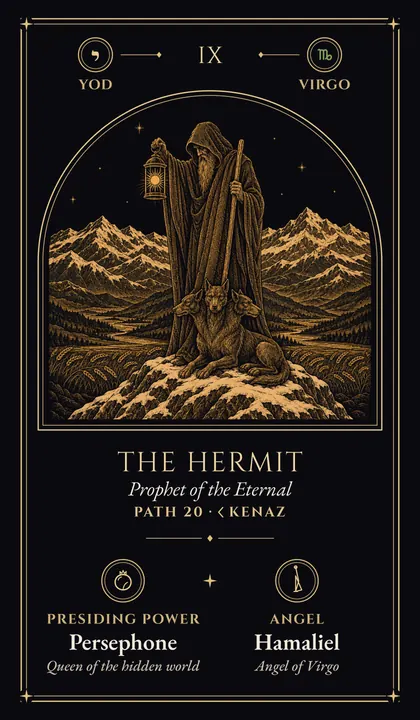
The Sablerune Tarot
In the making
Seventy-eight cards in fine gold line. Hear when the deck is ready to hold.
Join the listNotes on sources
The meanings, the questions and the correspondences are the guidebook’s own. The paths, letters and astrology follow the Golden Dawn’s attributions; the angels are the Shem ha-Mephorash, as the deck gives them; the spirits, shown only when you ask for them, are the seventy-two of the Goetia. Where each comes from, and what is old and what is modern, is set out in the guidebook’s Notes on sources and seals.