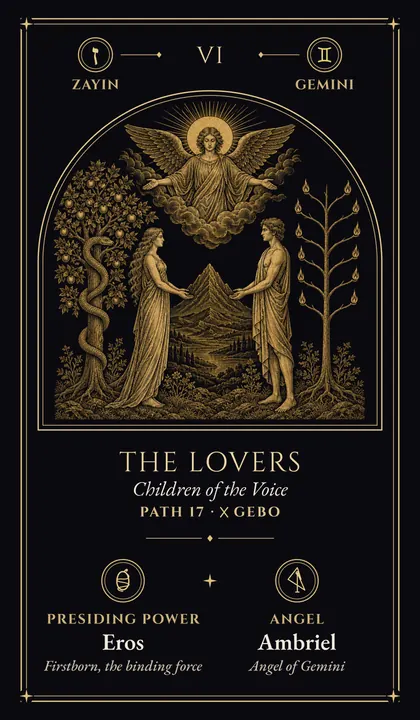
Choice, union and the oracle of the heart.
Upright
A meaningful relationship or a decision that defines who you are. Choose from your values, not from fear. Two become more than the sum of their parts.
Reversed
Misalignment, temptation or a choice deferred so long it is making itself.
Show the spirits
The spirit work
In the Goetia, Asmoday gives the ring of virtues and teaches the measures of the heavens. Eros was the first of the gods, the force that binds. Read for relationship questions with the card face up between two candles.
A question to sit with
Which choice would I make if I trusted my own heart completely?

Where the card sits
Correspondences
Show the spirits
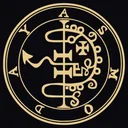
Appears as three heads (bull, man, ram), serpent’s tail, breathing fire, riding a dragon. Gives the ring of virtues, teaches arithmetic, astronomy and geometry, reveals treasure. Chief under Amaymon. Goetia 32.
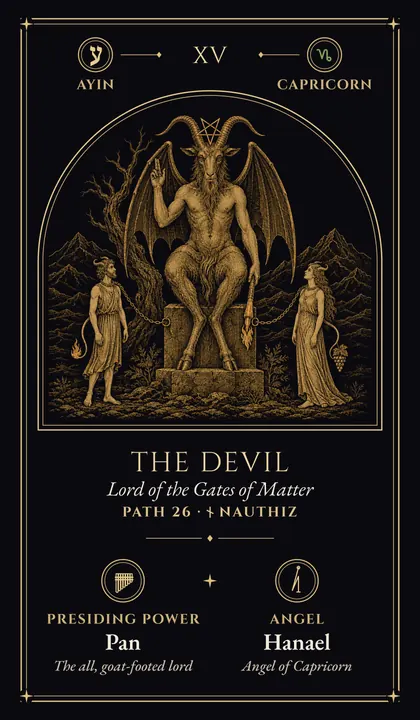
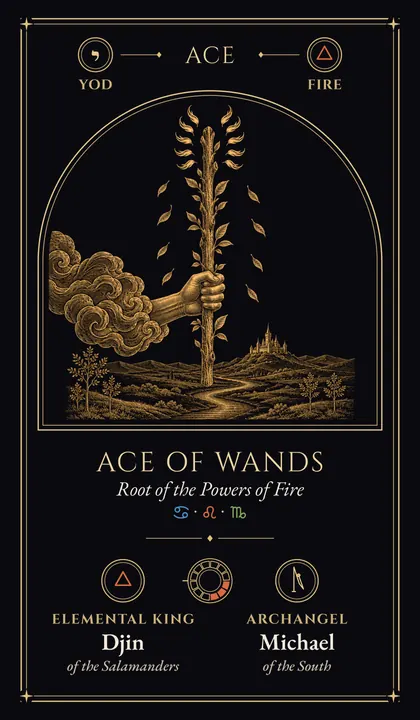
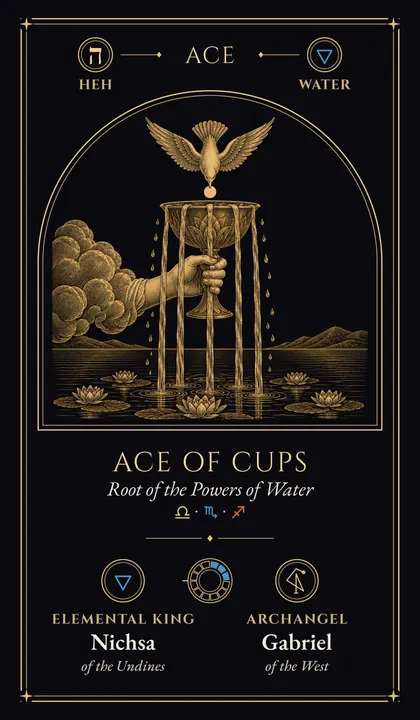
The Sablerune Tarot
In the making
Seventy-eight cards in fine gold line. Hear when the deck is ready to hold.
Join the listNotes on sources
The meanings, the questions and the correspondences are the guidebook’s own. The paths, letters and astrology follow the Golden Dawn’s attributions; the angels are the Shem ha-Mephorash, as the deck gives them; the spirits, shown only when you ask for them, are the seventy-two of the Goetia. Where each comes from, and what is old and what is modern, is set out in the guidebook’s Notes on sources and seals.